
Ojime
Unknown Artist
19th century
Medium
Ivory
Dimensions
H. 1/2 in. (1.3 cm); Diam. 5/8 in. (1.6 cm)
Classification
Ojime
Culture & Period
Japan · Edo period (1615–1868)
Department
Asian Art
Museum
Metropolitan Museum of Art, New York, NY
Credit
Bequest of Stephen Whitney Phoenix, 1881
Accession Number
81.1.424.83
Rights
Public Domain
Tags
Art Historical Context
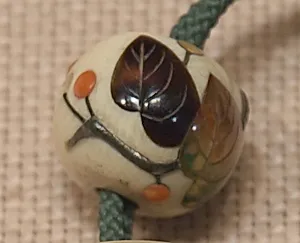
This exquisite ojime, a tiny ivory bead from 19th-century Japan during the Edo period (161–1868), served as a practical yet artistic fastener. Part of the traditional netsuke ensemble, it cinched the silk cords of an inro—a small lacquered medicine or tobacco box carried by samurai and merchants. Edo Japan's sumptuary laws restricted lavish clothing, so men expressed status through these intricate accessories, blending functionality with refined artistry. Carved from ivory, this ojime measures just 1/2 inch high and 5/8 inch in diameter, demanding masterful precision from its unknown artisan. Its delicate motifs of fruit and leaves evoke the natural world, a hallmark of Japanese aesthetics celebrating impermanence and beauty in everyday forms. Ivory's smooth, luminous quality allowed for fine detailing, highlighting the era's virtuoso carving techniques. Now in the Metropolitan Museum of Art's Asian Art Department, thanks to the 1881 bequest of Stephen Whitney Phoenix, this ojime offers a window into Edo elegance. It reminds us how miniature objects could embody profound cultural values, turning the mundane into the magnificent.