
Old Man and Woman
Medium
Hanging scroll; ink and color on silk
Dimensions
11 3/4 x 16 1/2 in. (29.8 x 41.9 cm)
Classification
Paintings
Culture & Period
Japan · Edo period (1615–1868)
Department
Asian Art
Museum
Metropolitan Museum of Art, New York, NY
Credit
Rogers Fund, 1917
Accession Number
17.118.117
Rights
Public Domain
Tags
Art Historical Context
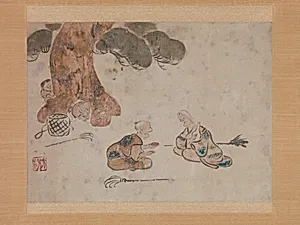
Ogata Kōrin's *Old Man and Woman* is a captivating hanging scroll from Japan's Edo period (1615–1868), a time of relative peace and artistic flourishing under the Tokugawa shogunate. Created in ink and color on silk, this intimate painting measures just 11 3/4 x 16 1/2 inches, perfect for private contemplation in a scholar's studio or merchant's home. Kōrin (1658–1716), a master of the Rinpa school, infused his works with bold, decorative flair, drawing from nature's rhythms and classical traditions while embracing asymmetry and vibrant palettes. The medium of silk highlights Kōrin's virtuosic techniques: delicate ink washes blend with vivid mineral pigments, evoking textures of aged skin, flowing robes, and gnarled trees. Hanging scrolls like this were unrolled seasonally, transforming walls into ephemeral art spaces and underscoring Japan's reverence for impermanence (*mono no aware*). Here, the elderly couple amid trees may symbolize enduring companionship and harmony with nature, common Rinpa motifs that celebrated life's poetic cycles. Acquired through the Rogers Fund in 1917, this gem at the Metropolitan Museum of Art exemplifies Edo-era elegance, bridging elite literati tastes with merchant patronage. Visitors will appreciate its subtle emotional depth—a timeless portrait of quiet wisdom.
About the Artist
Ogata Kōrin · 1658–1716
Noted as one of the most important Japanese artists of the 17th century; known for paintings of irises and other subjects. He was regarded, along with Sotatsu, as one of the masters of the Sotatsu-Koetsu school of decorative painting, including painted screens and textile designs. He was descended from a samurai who had served under the Ashikaga rulers.