
Olive Trees
Vincent van Gogh, 1889
About this artwork
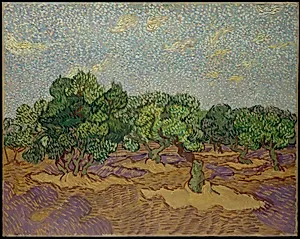
Vincent van Gogh's *Olive* (1889), an oil on canvas measuring 28⅝ × 36¼ inches, captures the timeless beauty of Provençal landscapes during the artist's final years. Created amid his stay at the Saint-Rémy asylum, this work belongs to a series of olive tree paintings that reflect Van Gogh's deep fascination with the Mediterranean countryside. As a cornerstone of Post-Impressionism, it showcases his revolutionary techniques: bold, swirling brushstrokes, vibrant contrasts of cool blues and earthy greens, and a rhythmic composition that infuses nature with emotional intensity. The olive tree, a symbol of peace and resilience in southern France, becomes a vibrant subject under Van Gogh's hand, rendered with thick impasto that gives the canvas a textured, almost sculptural quality. This medium allowed him to layer colors expressively, pushing beyond realistic representation to evoke the spiritual essence of the scene. Painted just months after his infamous ear incident, it reveals his unyielding passion for light and form despite personal turmoil. Now housed in the Metropolitan Museum of Art's European Paintings department, thanks to the generous bequest from Walter H. and Leonore Annenberg, *Olive Trees* invites visitors to ponder Van Gogh's profound connection to the natural world—a testament to his enduring influence on modern art.