
Oliver Hazard Perry
Medium
Classification
Department
Smithsonian Collection
Museum
Smithsonian American Art Museum
Credit
National Portrait Gallery, Smithsonian Institution
Accession Number
NPG.79.13
Rights
Public Domain
Tags
Art Historical Context
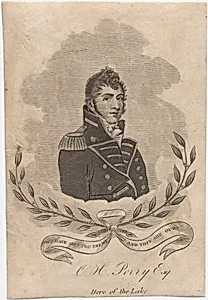
In the early 19th century, like George Delleker's * Hazard Perry* (c 1813) served as affordable, widely circulated portraits that celebrated American heroes during the War of 1812. Delleker, a young engraver active in Philadelphia from around 1805 to 1824, captured Commodore Oliver Hazard Perry in military attire—complete with epaulets,, a tie, and his Congressional Gold Medal. This engraving immortalizes Perry as a symbol of naval triumph, particularly his pivotal victory at the Battle of Lake Erie in 1813, where his forces decisively defeated the British, securing U.S. control of the Great Lakes. The artwork's historical significance lies in its role as patriotic memorabilia, reflecting national pride amid the young republic's fight for independence from British influence. Prints such as this were not just art but cultural touchstones, reproduced on buttons, broadsides, and keepsakes to inspire civilians and soldiers alike. Housed in the Smithsonian American Art Museum's National Portrait Gallery collection, it exemplifies how engraving techniques allowed for detailed rendering of insignia and heroic poses, making elite figures accessible to the masses. Today, *Oliver Hazard Perry* reminds us of the War of 1812's legacy in forging American identity, blending artistry with propaganda in a single, striking image.