
Omer Talon
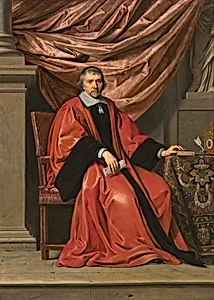
Medium
oil on canvas
Dimensions
overall: 225 x 161.6 cm (88 9/16 x 63 5/8 in.) framed: 261.9 x 197.5 x 7 cm (103 1/8 x 77 3/4 x 2 3/4 in.)
Classification
Painting
Department
CF
Museum
National Gallery of Art, Washington, D.C.
Credit
Samuel H. Kress Collection
Accession Number
1952.5.35
Rights
Public Domain
Art Historical Context
Philippe de Champaigne'sOmer Talon* (1649) is a commanding oil-on-canvas portrait measuring nearly nine feet tall, capturing the French jurist and statesman in a moment of poised authority. Painted during a turbulent era in French history—the lead-up to the Frondeions—Talon, as Advocate General of the Parlement of Paris, embodied the era's intellectual and political elite. Champaigne, a leading Flemish-born artist in Louis XIV's France, renders him with stark realism, his black robes and white collar stark against a neutral background, emphasizing dignity over ornamentation. Champaigne's style reflects the austere influence of Jansenism, a Catholic reform movement stressing moral rigor, which tempered the exuberance of full Baroque portraiture. The oil medium allows for luminous skin tones and precise detailing in Talon's face and hands, achieved through glazing techniques that lend psychological depth. This half-length format, monumental in scale, underscores the subject's public role, making it a quintessential example of 17th-century French portraiture. Now part of the Samuel H. Kress Collection at the National Gallery of Art, *Omer Talon* invites viewers to ponder the intersection of law, faith, and power in absolutist France—a timeless study in gravitas.
About the Artist
Philippe de Champaigne · 1602–1674
He was known as one of the greatest portrait painters of 17th-century France. His art was based in an analytical study of appearances and on psychological truth. He was also one of the principal instigators of the Classical tendency and a founder-member of the Académie Royale de Peinture et de Sculpture. He developed an interest in Jansenist thinking, typified by a severe plainness of style. His ...