
One of a Set of Twelve Chair Strips
Unknown Artist
Medium
Silk, metallic thread; on silk
Dimensions
72 1/2 x 20 1/2 in. (184.15 x 52.07 cm)
Classification
Textiles-Embroidered
Culture & Period
China · Qing dynasty (1644–1911), Qianlong period (1736–95)
Department
Asian Art
Museum
Metropolitan Museum of Art, New York, NY
Credit
Gift of Mrs. Henry-George McNeary, 1966
Accession Number
66.191.9
Rights
Public Domain
Tags
Art Historical Context
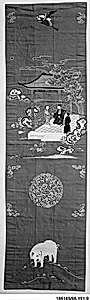
This exquisite "One of a Set of Chair Strips" hails from China's Qing dynasty during the Qianlong period (6–95), a age of imperial patronage and refined craftsmanship. Crafted from silk embroidered with shimmering metallic threads, this long, narrow panel—measuring over six feet in height—was designed as a decorative valance for the back of a chair, transforming everyday furniture into opulent displays status. Such sets of twelve, symbolizing completeness in Chinese cosmology, adorned elite interiors like palaces or scholarly studios, showcasing the era's mastery of textile arts. The embroidery bursts with vibrant scenes of birds in flight, elegant men and women in traditional robes, majestic elephants, and ornate pavilions—auspicious motifs evoking harmony, prosperity, and imperial grandeur. Elephants, rare in China yet revered as symbols of strength and wisdom, likely nod to tribute from southern realms, while pavilions suggest serene gardens or courtly gatherings. Techniques like fine satin stitching and couched metallic threads create a luminous, three-dimensional effect, highlighting the anonymous artisans' skill in the imperial workshops. A gift to the Metropolitan Museum of Art in 1966, this chair strip offers a window into Qianlong's lavish aesthetic, where textiles rivaled painting in prestige and preserved cultural narratives for generations.