
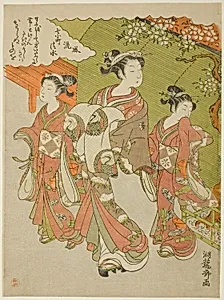
Ono no Komachi Visiting Kiyomizu Temple, from the series The Fashionable Seven Komachi (Furyu nana Komachi)
Edo period (1615–1868), n.d.
Medium
Color woodblock print; chuban
Dimensions
26.1 × 19.1 cm (10 1/4 × 7 1/2 in.)
Classification
woodblock print
Department
Arts of Asia
Museum
Art Institute of Chicago
Accession Number
89095
Rights
Public Domain
About this artwork
A courtesan and her two assistants view a cherry tree on the grounds of Kiyomizu Temple in Kyoto. Although the younger women appear unaffected by the sight, the older woman seems struck by it, recalling a famous poem by Ono no Komachi that is written in a cloud: Why have I grown old without accomplishing anything, While the appearance of the waterfall remains unchanged. (Translation by Chie Hirano) The waterfall at Kiyomizu Temple is not pictured in this image, although it often appears i...
Art Historical Context
Step into the vibrant world of Edo-period Japan with *Ono no Komachi Visiting Kiyomizu Temple*, a color woodblock print by the acclaimed ukiyo-e artist Isoda Koryusai. Created during the Edo period (1615–8), this chuban-format print—measuring a compact 26.1 × 19.1 cm—captures a fashionable reinterpretation of the legendary Heian-era poetess Ono no Komachi. Part of Koryusai's series *The Fashionable Seven Komachi (Furyu nana Komachi)*, it places the iconic beauty in a serene temple visit, blending classical literary heritage with contemporary Edo style. Ukiyo-e prints like this one revolutionized Japanese art through their innovative woodblock technique, allowing for vivid colors and intricate details produced in multiples for a wide audience. Koryusai, a master of bijin-ga (pictures of beautiful women), infuses the scene with elegance, highlighting Komachi's poise amid the temple's architectural splendor. The chuban size made such works accessible and collectible, reflecting the period's booming urban culture. Housed in the Art Institute of Chicago's Arts of Asia department, this print offers a window into how Edo artists revived ancient tales through modern lens, celebrating beauty, poetry, and spirituality in everyday devotion. A delightful gem for admirers of Japanese printmaking!