
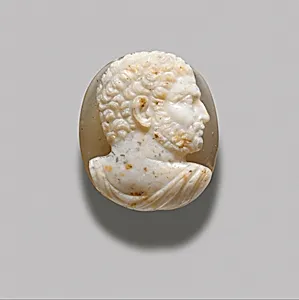
Onyx cameo bust of Caracalla
Unknown Artist
ca. 211–217 CE
Medium
Onyx
Dimensions
H.: 1 1/16 x 15/16 in. (2.7 x 2.4 cm)
Classification
Gems
Culture & Period
Roman · Mid-Imperial, Severan
Department
Greek and Roman Art
Museum
Metropolitan Museum of Art, New York, NY
Credit
Purchase, Joseph Pulitzer Bequest, 1942
Accession Number
42.11.31
Rights
Public Domain
Tags
Art Historical Context
Behold this exquisite *Onyx cameo bust ofacalla*, a diminutive yet powerful gem from the Roman Empire's Mid-Imperial Severan period (ca. 211–217 CE). Carved from layered onyx by an unknown artist, this tiny portrait measures just 1 /16 x 15/16 inches (2.7 x 2.4 cm), small enough to fit on a finger ring or pendant. Now housed in the Metropolitan Museum of Art's Greek and Roman Art Department it was acquired through the Joseph Pulitzer Bequest 1942. The bust depicts Emperor Caracalla, ruler from 211 to 217 CE, whose stern features and imperial gaze evoke the authority of the Severan dynasty. During this era of military expansion and dynastic intrigue, such cameos served as portable symbols of power—likely used as seals, jewelry, or talismans by elites. Roman gems like this blended Greek intaglio traditions with imperial portraiture, celebrating rulers in miniature form. Artistically, the cameo technique shines here: artisans exploited onyx's contrasting layers to create a raised relief, with the emperor's profile emerging in white against a darker ground. This labor-intensive craft highlights Roman mastery of hardstone carving, turning a pebble-sized object into a masterpiece of propaganda and portraiture. A true pocket-sized emperor!