
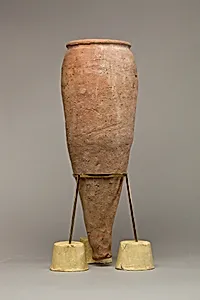
Open mouth jar
Unknown Artist
ca. 3850–2960 B.C.
Medium
Pottery
Classification
Jar
Period
Predynastic Period
Department
Egyptian Art
Museum
Metropolitan Museum of Art, New York, NY
Credit
Rogers Fund, 1936
Accession Number
36.1.47
Rights
Public Domain
Art Historical Context
Welcome to the ancient wonders of Egypt's Predyn Period with this striking *Open Mouth Jar*, crafted around 3850–2960 B.C. by an unknown artisan. Dating to a time before the pharaohs and pyramids, this pottery vessel hails from the formative Naqada I-II phases, when Nile Valley communities were transitioning from nomadic life to settled agriculture. Such jars were everyday essentials, used for storing grain, beer, or oils, reflecting the era's growing reliance on farming and trade. Made of fired clay, the jar showcases early Egyptian pottery techniques: hand-built without a wheel, then polished and fired in low-oxygen kilns to achieve durable, sometimes blackened surfaces. The wide "open mouth" design maximized utility for scooping contents, while its simple, functional form hints at emerging aesthetic sensibilities—smooth curves and proportions that foreshadow the refined symmetry of dynastic art. Acquired through the Rogers Fund in 1936, this piece from the Metropolitan Museum of Art illuminates predynastic innovation. It captures a pivotal moment when pottery became a canvas for cultural identity, often appearing in burials as grave goods symbolizing sustenance in the afterlife. A humble yet profound artifact, it connects us to the roots of one of history's greatest civilizations.