
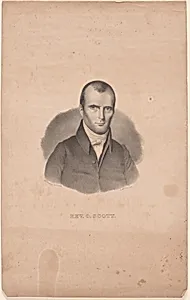
Orange Scott
c. 1835-41
Medium
Classification
Department
Smithsonian Collection
Museum
Smithsonian American Art Museum
Credit
National Portrait Gallery, Smithsonian Institution; transfer from the Archives of American Art
Accession Number
S/NPG.84.328
Rights
Public Domain
Tags
Art Historical Context
Behold the portrait print *Orange Scott* by Benjamin F. Nut (?-1887), created around 1835-1841. This striking image captures the likeness of Orange Scott, a dedicated Methodist minister and fervent abolitionist during America's turbulent antebellum era. Housed in the Smithsonian American Art Museum, the work was transferred from the National Portrait and Archives of American Art, undersc its value in preserving key figures of U.S. history. Scott played a pivotal role in the abolitionist movement, helping lead the schism that birthed the Wesleyan Methodist Connection in 1843—a direct rebuke to slavery within mainstream Methodism. In an age when print portraits were vital tools for spreading reformist ideals, Nutting's depiction immortalized Scott's resolute gaze, making him a familiar face to supporters rallying against human bondage. Such prints democratized access to influential leaders, fueling public discourse on moral and social justice. As a print medium, this artwork exemplifies early 19th-century reproductive techniques like engraving or lithography, which allowed mass production from a single image source. Nutting, known for his portraiture, contributed to a visual culture that amplified voices for change, reminding us today of art's power in the fight for equality.