
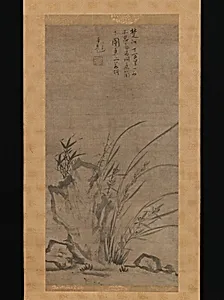
鉄舟徳済筆 蘭竹石図|Orchids, Bamboo, Briars, and Rocks
mid-14th century
Medium
Hanging scroll; ink on paper
Dimensions
Image: 28 3/8 × 14 1/2 in. (72 × 36.8 cm) Overall with mounting: 60 1/16 × 19 5/16 in. (152.5 × 49 cm) Overall with knobs: 60 1/16 × 21 in. (152.5 × 53.4 cm)
Classification
Paintings
Culture & Period
Japan · Nanbokuchō period (1336–92)
Department
Asian Art
Museum
Metropolitan Museum of Art, New York, NY
Credit
Mary Griggs Burke Collection, Gift of the Mary and Jackson Burke Foundation, 2015
Accession Number
2015.300.61
Rights
Public Domain
Tags
Art Historical Context
Created during Japan's Nanbokuchō period (6–92), a time of civil strife between rival imperial courts, *Orch, Bamboo, Briars, and Rocks is a hanging scroll in ink on paper by the monk-painter Tesshū Tokusai (active mid-14th century). intimate work, measuring about 28 × 14 inches, exemplifies the minimalist elegance of monochromatic ink painting, a technique influenced by Chinese Chan (Zen) traditions that emphasized spontaneity and spiritual insight over realism. The composition features classic motifs from literati painting: delicate orchids symbolizing refined virtue, resilient bamboo for upright integrity, rugged rocks for steadfastness, and thorny briars adding a touch of wild tenacity. Rendered with fluid brushstrokes on lightweight paper, the hanging scroll format allowed it to be unrolled for contemplation during tea gatherings or meditation, reflecting Zen ideals of impermanence and harmony with nature amid political chaos. Housed in the Metropolitan Museum of Art's Mary Griggs Burke Collection, this rare early example of Japanese ink monochrome painting highlights the cross-cultural exchange between China and Japan, bridging Muromachi-era aesthetics and the rise of Zen monastic art. Visitors can appreciate how Tesshū's economical lines evoke profound tranquility, inviting quiet reflection.