
Ornament
Unknown Artist
19th century
Medium
Chenille
Dimensions
2 1/2 x 3 inches (6.4 x 7.6 cm)
Classification
Textiles-Trimmings-Passementerie
Culture
German
Department
European Sculpture and Decorative Arts
Museum
Metropolitan Museum of Art, New York, NY
Credit
Rogers Fund, 1909
Accession Number
09.50.1723
Rights
Public Domain
Tags
Art Historical Context
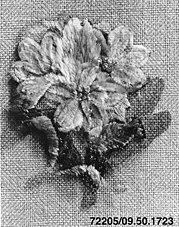
This delicate *Ornament* from 19th-century Germany exemplifies the exquisite craftsmanship of passementerie, a category of luxurious textile trimmings used to embellish clothing, upholstery, and interiors. Crafted in chenille—a velvety yarn created by twisting two strands around thicker pile for a plush, caterpillar-like texture—this small piece measures just 2½ x 3 inches. Its floral motifs, delicately rendered, evoke the romantic naturalism popular in Victorian-era decorative arts, transforming everyday fabrics into opulent statements. In the context of 19th-century Europe, passementerie like this German example reached new heights of intricacy during the Industrial Revolution, blending handloom techniques with emerging mechanized production. Flowers symbolized beauty, abundance, and the era's fascination with botany, often adorning bourgeois homes and garments. Though created by an unknown artist, the precision of its weave highlights the skilled labor of anonymous artisans in textile hubs. Acquired through the Rogers Fund in 1909 and housed in the Metropolitan Museum of Art's Department of European Sculpture and Decorative Arts, this ornament offers a window into everyday luxury. Up close, its tactile richness invites visitors to appreciate how such tiny treasures elevated the ordinary to the extraordinary.