
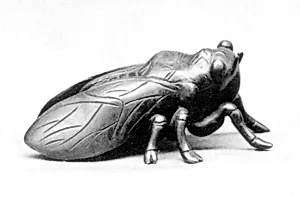
Ornament in the Form of a Bee
Unknown Artist
19th century
Medium
Bronze
Dimensions
H. 1 1/4 in. (3.2 cm); W. 2 3/4 in. (7 cm); D. 1 3/4 in. (4.4 cm)
Classification
Metalwork
Culture & Period
Japan · Edo (1615–1868) or Meiji period (1868–1912)
Department
Asian Art
Museum
Metropolitan Museum of Art, New York, NY
Credit
Edward C. Moore Collection, Bequest of Edward C. Moore, 1891
Accession Number
91.1.480
Rights
Public Domain
Tags
Art Historical Context
This delicate bronze ornament, crafted in the shape of a bee during Japan’s Edo (1615–1868) or Meiji (1868–1912) period, exemplifies the refined metalworking traditions of the 19th century. Measuring just over three inches wide, the compact form captures the insect’s distinctive wings and segmented body with subtle detail, suggesting it may have served as a decorative accent for personal items, furniture, or ceremonial objects. Bronze, valued for its durability and ability to hold fine casting, allowed artisans to create lasting, miniature works that blended utility with natural observation. The piece originates from a time of significant transition in Japan, as the country moved from the relative isolation of the Edo era into the rapid modernization of the Meiji period. Small-scale metal ornaments like this one reflect the continued appreciation for nature motifs in Japanese design, where insects often symbolized seasonal change and the beauty of the everyday world. Its presence in the Metropolitan Museum’s Edward C. Moore Collection underscores its appeal to 19th-century Western collectors, who admired the technical precision and aesthetic restraint of Japanese metalwork. Today, the ornament invites viewers to appreciate the quiet artistry behind functional decoration, highlighting how even the smallest objects can convey cultural values of craftsmanship and harmony with nature.