
Ornamented Knife (tumi)
15th–early 16th century
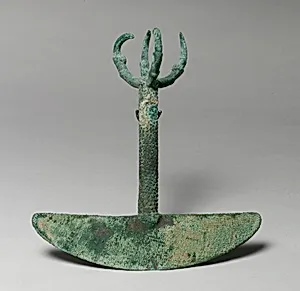
Medium
Tin bronze
Dimensions
H. 6 3/4 × W. 6 1/4 × D. 2 1/2 in. (17.1 × 15.9 × 6.4 cm)
Classification
Metal-Implements
Culture
Inca
Department
Arts of Africa, Oceania, and the Americas
Museum
Metropolitan Museum of Art, New York, NY
Credit
Bequest of Jane Costello Goldberg, from the Collection of Arnold I. Goldberg, 1986
Accession Number
1987.394.411
Rights
Public Domain
Art Historical Context
This Ornamented Knife, or tumi, was crafted by Inca artists during the 15th to early 16th century, at the height of the Inca Empire in the Andes. Fashioned from tin bronze, the piece reflects the civilization’s sophisticated metalworking traditions, in which artisans alloyed copper with tin to create durable tools and implements that combined strength with fine detailing. Measuring just under seven inches tall, the knife’s compact form and ornamented surfaces suggest it served both practical and symbolic roles within Inca culture. Such tumi were often associated with ritual or elite contexts, their decorative elements elevating them beyond everyday utility to objects of status and craftsmanship. Today in the Metropolitan Museum of Art’s collection, this work offers visitors a tangible connection to the artistic and technological achievements of pre-Columbian South America.