
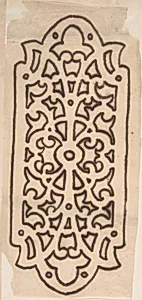
Ornamented Metal Doorplate
second half 19th century
Medium
Pen and ink on tracing paper
Dimensions
sheet: 8 5/16 x 3 15/16 in. (21.1 x 10 cm)
Classification
Drawings|Ornament & Architecture
Department
Drawings and Prints
Museum
Metropolitan Museum of Art, New York, NY
Credit
The Elisha Whittelsey Collection, The Elisha Whittelsey Fund, 1960
Accession Number
60.632.167(2)
Rights
Public Domain
Tags
Art Historical Context
Step into the refined world of 19th British design with this delicate *Ornamented Metal Doorplate*, a pen and ink drawing on tracing paper by an anonymous artist from the second half of the. Measuring just 8 5/16 x 3 15/16 inches, this small-scale sheet captures the meticulous planning behind decorative metalwork, likely intended as a blueprint for an elegant door fitting. Housed in the Metropolitan Museum of Art's Drawings and Prints department as part of The Elisha Whittelsey Collection (acquired through the Elisha Whittelsey Fund in 1960), it exemplifies the era's fascination with ornament in architecture. Created on translucent tracing paper—a favored medium for draftsmen—this work allowed artists to overlay and refine intricate patterns with precision, ensuring symmetry and detail in final metal executions. Pen and ink techniques highlight fine lines and flourishes typical of Victorian ornamental styles, blending functionality with aesthetic flourish. Such drawings were essential in workshops, bridging the gap between concept and craftsmanship during Britain's industrial boom, when decorative hardware adorned grand homes and public buildings. This anonymous gem invites us to appreciate the unsung artistry behind everyday elegance, revealing how even humble doorplates embodied cultural aspirations for beauty and order in the 19th century.
About the Artist
Anonymous, British, 19th century · 1800–1900
**Anonymous, British, 19th century** is not the name of a single individual but a standard museum attribution used for works whose creators remain unidentified yet are clearly British and date to the 1800s. Major institutions, including the Metropolitan Museum of Art, employ this designation for hundreds of drawings, prints, designs, and decorative studies that lack signatures or firm documentary ...