
Ornamented Plaques
Unknown Artist
7th–9th century
Medium
Gold with turquoise inlay
Dimensions
Square plaque 1 1/16 x 1 1/16 in. (2.7 x 2.7 cm); rectangular plaque 1 1/16 x 9/16 in. (2.7 x 1.4 cm)
Classification
Metalwork
Culture
Eastern Central Asia or northern China
Department
Asian Art
Museum
Metropolitan Museum of Art, New York, NY
Credit
Purchase, Barbara and William Karatz Gift, 2000
Accession Number
2000.442a–e
Rights
Public Domain
Art Historical Context
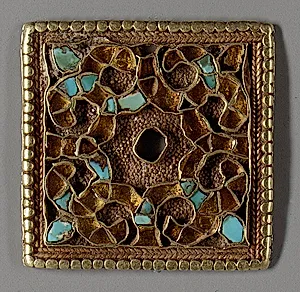
Nestled in the Asian Art department of the Metropolitan of Art, these *Ornamented Plaques (7th–9th century) showcase the exquisite metalwork of Eastern Central or northern China. Craft by an unknown artist, the set includes a delicate square plaque measuring just 1 1/16 x 1 1/16 inches and a slender rectangular one at 11/16 x 9/16 inches. Acquired through the generous Barbara and William Karatz Gift 2000, these treasures highlight the sophistication of early medieval craftsmanship along ancient trade routes. Forged from pure gold and adorned with vibrant turquoise inlays, the plaques exemplify luxury metalworking techniques of the era. Turquoise, prized for its celestial blue hue, was often sourced from distant mines and set into gold to create shimmering contrasts, symbolizing wealth and spiritual protection in nomadic or frontier cultures. Such opulent materials suggest these pieces served as personal ornaments—perhaps belt fittings, jewelry, or horse trappings—for elite patrons traversing the Silk Road. These plaques offer a glimpse into a dynamic world of cultural exchange between China and Central Asia during the Tang Dynasty's expansive reach. Their diminutive scale belies their grandeur, inviting us to marvel at the artisan's precision and the enduring allure of portable artistry from a vibrant, interconnected past.