
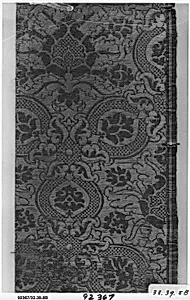
Orphrey and two panels
Unknown Artist
15th–16th century
Medium
Silk and linen
Dimensions
L. 44 x W. 9 inches (111.8 x 22.9 cm)
Classification
Textiles-Woven
Culture
Italian, possibly Florence
Department
European Sculpture and Decorative Arts
Museum
Metropolitan Museum of Art, New York, NY
Credit
Gift of Mrs. Van Santvoord Merle-Smith, 1933
Accession Number
33.39.8b
Rights
Public Domain
Art Historical Context
This exquisite *Orphrey and two panels*, crafted in the 15th–16th centuries, hails from Italy—possibly the textile powerhouse of Florence. Woven from luxurious silk and linen, these narrow strips (44 x 9 inches) once adorned ecclesiastical vestments, such as chasubles worn by clergy during Masses. An orphrey refers to the ornate vertical band on such garments, often featuring intricate motifs that symbolized religious devotion and status. The use of silk, prized for its sheen and durability, underscores the era's mastery of weaving techniques, blending fine threads into patterned bands fit for sacred rituals. In Renaissance Italy, textiles like these were more than fabric—they were canvases for artistic expression and displays of piety. Florence's silk industry flourished under guild patronage, producing opulent goods for churches and nobility. This piece, classified as woven textiles in the Met's European Sculpture and Decorative Arts collection, highlights the anonymous artisans' skill in creating luminous, tactile works that elevated liturgy. Gifted in 1933 by Mrs. Van Santvoord Merle-Smith, it invites us to appreciate the hidden splendor of medieval craftsmanship, where every thread wove faith into fashion.