
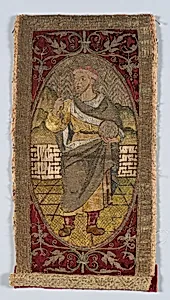
Orphrey section made into cushion
Unknown Artist
second half 16th century
Medium
silk, linen, metal
Dimensions
46.5 x 46 cm (18 3/8 x 18 1/8 in)
Classification
Textiles-Embroidered
Culture
Italian or Spanish
Department
Robert Lehman Collection
Museum
Metropolitan Museum of Art, New York, NY
Credit
Robert Lehman Collection, 1975
Accession Number
1975.1.2449
Rights
Public Domain
Tags
Art Historical Context
This exquisite orphrey section, repurposed as a cushion, hails from the second half of the 16 century and originates from either Italy or Spain—regions renowned for their lavish ecclesiastical textiles during the late Renaissance. Originally a decorative band adorning liturgical vestments worn by clergy, orphreys like this one were prominent features on stoles, cop, or chasubles, symbolizing spiritual authority and divine splendor. Measuring a compact 46.5 x 46 cm, it now resides in the Metropolitan Museum of Art's Robert Lehman Collection, acquired in 1975. Crafted from silk, linen, and metal threads, the embroidery showcases masterful techniques typical of the era, including couched metalwork that created shimmering gold and silver effects under candlelit church interiors. These materials not only ensured durability but also conveyed opulence, reflecting the Catholic Church's emphasis on visual magnificence amid the Counter-Reformation. The focus on men's liturgical objects underscores its role in male-dominated religious ceremonies. Today, this artifact offers a tactile glimpse into Renaissance textile artistry, highlighting how opulent fabrics bridged the sacred and secular. Repurposed as a cushion, it illustrates the adaptive life of historical textiles, preserving their intricate beauty for modern admirers.