
Osiris
Unknown Artist
664–30 B.C.
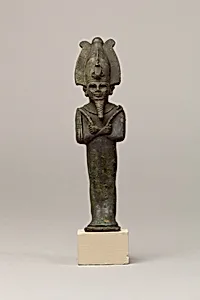
Medium
Cupreous metal
Dimensions
H. 13.8 cm (5 7/16 in.); W. 3.6 cm (1 7/16 in.); D. 5 cm (1 15/16 in.) H. (with tang): 15.7 cm (6 3/16 in.)
Classification
Statuette, Osiris
Period
Late Period–Ptolemaic Period
Department
Egyptian Art
Museum
Metropolitan Museum of Art, New York, NY
Credit
Gift of Darius Ogden Mills, 1904
Accession Number
04.2.579
Rights
Public Domain
Art Historical Context
Behold the enigmatic statuette of *Osiris*, the ancient Egyptian god of the underworld, resurrection, and eternal life. Crafted by an unknown artist during Egypt's Late Period to Ptolemaic era (664–30 B.C.), this petite figure stands just 13.8 cm tall, made from cupreous metal—a durable copper alloy prized for its luster and symbolic ties to divine vitality. Its slender form, complete with a tang for mounting on a base, suggests it served as a votive offering or personal amulet, invoking Osiris's protective powers in daily rituals or burials. In the turbulent centuries spanning native rule's twilight and Greek Ptolemaic dominance, such figurines embodied Egypt's enduring spiritual traditions amid cultural shifts. Osiris, often depicted mummiform with a crook and flail, symbolized renewal after death, mirroring the Nile's floods. The metal's corrosion-resistant patina hints at sophisticated lost-wax casting techniques, allowing intricate details on this 3.6 cm wide artifact. A cherished gift to the Metropolitan Museum of Art in 1904 from Darius Ogden Mills, *Osiris* invites us to ponder the ancients' quest for immortality. Gaze upon it and feel the whisper of eternity.