
Ostracon
Unknown Artist
A.D. 37–41
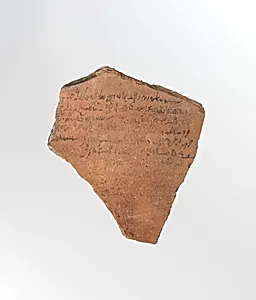
Medium
Pottery, ink
Dimensions
H. 11.5 × W. 10.2 × D. 3 cm (4 1/2 × 4 × 1 3/16 in.)
Classification
Ostracon, tax receipt
Period
Roman Period
Department
Egyptian Art
Museum
Metropolitan Museum of Art, New York, NY
Credit
Gift of Herbert E. Winlock, 1924
Accession Number
24.6.26
Rights
Public Domain
Art Historical Context
Step into the everyday world of Roman Egypt with this modest yet revealing *Ostracon*, a small shard of pottery inscribed with ink. Dating to A.D. 37–41, during the reign of Emperor Caligula, it hails from the Roman Period (30 B.C.–A.D. 641), when Egypt was a vital province of the Roman Empire. Ostraca like this one were ubiquitous writing surfaces—affordable alternatives to pricey papyrus—used by scribes, students, and ordinary folk for notes, drafts, magical spells, or sketches. Crafted from humble pottery and inked by an unknown hand, this piece measures just 11.5 × 10.2 × 3 cm, fitting easily in the palm. Its simplicity belies its cultural importance: such artifacts offer intimate glimpses into ancient literacy, administration, and creativity, bridging the monumental art of pharaonic Egypt with Greco-Roman influences. Techniques involved smoothing a broken potsherd and applying ink with a reed brush, showcasing practical artistry in daily life. A generous gift to the Metropolitan Museum of Art from Herbert E. Winlock in 1924, this ostracon invites us to ponder the voices of the unrecorded—reminding us that history thrives in fragments.