
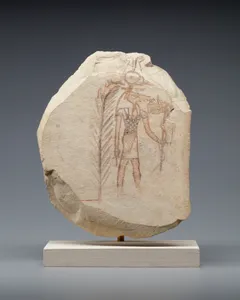
Ostracon Depicting the God Sobek
Unknown Artist
ca. 1295–1070 B.C.
Medium
Limestone, ink
Dimensions
H.12 × W. 14.3 × D. 3 cm (4 3/4 × 5 5/8 × 1 3/16 in.)
Classification
Ostracon, figured, Sobek?
Period
New Kingdom, Ramesside
Department
Egyptian Art
Museum
Metropolitan Museum of Art, New York, NY
Credit
Rogers Fund, 1929
Accession Number
29.2.23
Rights
Public Domain
Art Historical Context
Step into the vibrant world of ancient Egypt with this charming *Ostracon Depicting the God Sobek*, modest yet captivating artifact from the New Kingdom's Ramesside period (. 1295–1070 B.C., Dynasties 19–20). Crafted on a small limestone flake—measuring just 12 × 14.3 × 3 cm—this piece uses simple ink to portray Sobek, the powerful crocodile-headed deity revered as a protector of the pharaohs and lord of the Nile's fertile waters. Acquired through the Rogers Fund in 1929, it now the Metropolitan Museum of Art's Egyptian Art collection. Ostraca like this were everyday "scratch pads" in ancient Egypt, made from readily available limestone shards or pottery fragments. Artists and scribes used them for sketches, drafts, or magical drawings, offering a glimpse into the unpolished creativity behind monumental temple art. Here, the fluid ink lines capture Sobek's fierce yet divine form, highlighting the skill of an unknown Ramesside artist amid an era of imperial grandeur under rulers like Ramesses II. This humble ostracon reveals the cultural heart of Egyptian religion: Sobek embodied strength, fertility, and renewal, his cult centered in the Fayum region. Such devotional images might have served protective purposes in daily life, bridging the divine and the domestic in a civilization where gods walked among mortals. A delightful window into ancient ingenuity!