
Ostrakon
Unknown Artist
580–640
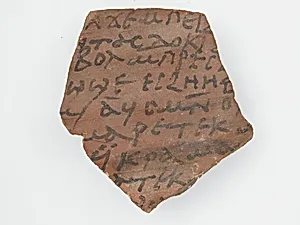
Medium
Pottery fragment with ink inscription
Dimensions
2 9/16 x 2 1/2 in. (6.5 x 6.3 cm)
Classification
Ceramics
Culture
Coptic
Department
Medieval Art
Museum
Metropolitan Museum of Art, New York, NY
Credit
Rogers Fund, 1914
Accession Number
14.1.182
Rights
Public Domain
Tags
Art Historical Context
This delicate ostrakon, a small pottery shard inscribed with ink, offers a glimpse into everyday life in Coptic Egypt during the late 6th to early 7th century (580–640 CE). Measuring just over 2 inches square, it exemplifies the resourceful use of broken ceramics as an affordable writing surface in a time before widespread paper. Housed in the Metropolitan Museum of Art's Medieval department, this artifact from the Rogers Fund of 1914 highlights the Coptic culture—a vibrant Christian tradition in post-pharaonic Egypt blending Greco-Roman, Egyptian, and early Byzantine influences. Ostraca like this were ubiquitous for notes, letters, school exercises, and administrative records, revealing high levels of literacy among Coptic communities. The ink inscription, though brief, underscores the practical artistry of the era: simple black ink on unglazed pottery, allowing quick, erasable writing. As a ceramic document, it bridges art and utility, preserving fragments of personal or religious expression from a pivotal moment before the Arab conquest transformed the region. Culturally, such ostraca illuminate Coptic identity—the last phase of ancient Egyptian language and script—preserving prayers, magic spells, or mundane lists that humanize a spiritual society. This unassuming piece invites us to appreciate how ordinary objects captured the pulse of faith and daily resilience in early medieval Egypt.