
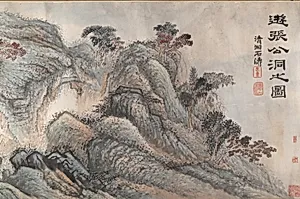
清 石濤(朱若極) 遊張公洞圖 卷|Outing to Zhang Gong's Grotto
ca. 1700
Medium
Handscroll; ink and color on paper
Dimensions
Image: 18 1/16 x 112 3/4 in. (45.9 x 286.4 cm) Overall with mounting: 18 7/16 x 363 11/16 in. (46.8 x 923.8 cm)
Classification
Paintings
Culture & Period
China · Qing dynasty (1644–1911)
Department
Asian Art
Museum
Metropolitan Museum of Art, New York, NY
Credit
Purchase, The Dillon Fund Gift, 1982
Accession Number
1982.126
Rights
Public Domain
Tags
Art Historical Context
In the serene world of Qing dynasty art, Shitao (Zhu Ruoji, 1642–1707), one of China's revered "Four Monks," a poetic outing to Zhang Gong Grotto in this exquisite handscroll from around 1700. Rendered in ink and color on paper, the work unfolds horizontally over nearly 10 feet, inviting viewers to unroll it slowly like a personal journey through mist-shrouded mountains, ancient trees, and rocky caverns. Shitao's innovative brushwork—bold, expressive strokes that defy rigid traditions—brings the landscape to life, blending delicate washes of color with dynamic ink lines to evoke the Daoist harmony of nature. As a former Manchu prince turned Buddhist monk, Shitao revolutionized literati painting by prioritizing individual intuition over classical formulas, influencing generations of artists. This handscroll, a intimate format for scholarly contemplation, likely depicts a real or idealized grotto pilgrimage, symbolizing spiritual retreat amid Qing China's cultural flux. Acquired by the Metropolitan Museum of Art in 1982, it exemplifies the era's fusion of personal expression and timeless landscape ideals, where towering trees and winding paths whisper tales of wanderlust and enlightenment.