
Oval Dish
Unknown Artist
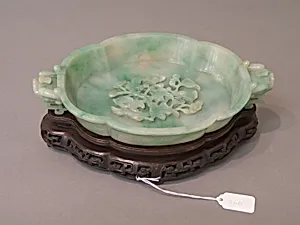
Medium
Jadeite
Dimensions
H. 1 3/4 in. (4.5 cm); W. 9 11/16 in. (24.6 cm); L. 6 1/4 in. (15.9 cm)
Classification
Jade
Culture & Period
China · Ming dynasty (1368–1644)
Department
Asian Art
Museum
Metropolitan Museum of Art, New York, NY
Credit
Gift of Heber R. Bishop, 1902
Accession Number
02.18.360
Rights
Public Domain
Art Historical Context
Nestled in the Metropolitan Museum of Art's Asian Art collection, this elegant oval dish exemplifies the masterful jade carving of China's Ming dynasty (13681644). Crafted lustrous jadeite—a vivid green variety of jade prized for its transluc and durability—the dish measures a delicate 1¾ inches high, 9 inches wide, and ¼ inches long. Its smooth, polished surfaces and subtle oval form suggest it served both practical purposes, like holding fruits or confections, and ceremonial display, reflecting the era's blend of utility and artistry. During the Ming period, jade held profound cultural significance in China, symbolizing purity, imperial virtue, and immortality. Artisans in imperial workshops employed intricate techniques, such as abrasion with abrasives like sand and diamond dust, followed by meticulous polishing to achieve the stone's signature glow. This anonymous masterpiece, gifted to the Met in 1902 by Heber R. Bishop, showcases the dynasty's technical prowess and aesthetic refinement, where even everyday objects became treasures. Visitors, pause to admire how the jadeite's natural veining dances with light— a testament to Ming jade's enduring allure in evoking harmony between man and nature.