
Overall Pattern with Acanthus Scrolls and a Chubby Putto
17th century
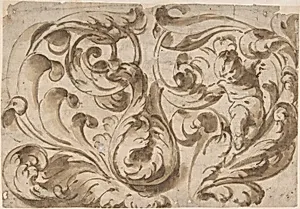
Medium
Brush and brown wash, over graphite underdrawing
Dimensions
image: 8 7/16 x 12 3/16 in. (21.4 x 31 cm)
Classification
Drawings|Ornament & Architecture
Department
Drawings and Prints
Museum
Metropolitan Museum of Art, New York, NY
Credit
The Elisha Whittelsey Collection, The Elisha Whittelsey Fund, 1952
Accession Number
52.570.89
Rights
Public Domain
Tags
Art Historical Context
Step into the opulent world of 17-century Italian ornamentation with this delicate drawing, *Overall Pattern with Acanthus and a Chubby Put*. Created by an anonymous artist, it features swirling acanthus scrolls—those lush, leafy motifs inspired by ancient classical architecture—intertwined with a plump, playful putto, the cherubic child figure emblematic of Baroque exuberance. Rendered in brush and brown wash over a precise graphite underdrawing, the8 7/16 x 12 3/16-inch sheet (21.4 x 31 cm) showcases the meticulous preparatory techniques used by draftsmen in workshops to design frescoes, tapestries, or architectural embellishments. This artwork exemplifies the Baroque era's passion for dynamic, theatrical decoration, where Italian artists revived Greco-Roman elements like acanthus to evoke grandeur and abundance. The brown wash adds subtle tonal depth, mimicking the shadows of carved stone or gilded surfaces, while the graphite lines ensure crisp, repeatable patterns—ideal for stonemasons or engravers. Putti like this one often symbolized innocence and divine joy, infusing sacred and secular spaces with whimsy. Housed in the Metropolitan Museum of Art's Drawings and Prints department as part of The Elisha Whittelsey Collection (1952), this anonymous gem offers a window into the collaborative craft of 17th-century design, reminding us how fleeting sketches birthed enduring masterpieces.