
Overseer Shabti of Nauny
Unknown Artist
ca. 1050 B.C.
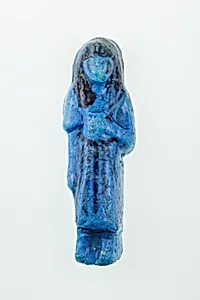
Medium
Faience
Dimensions
H. 9.8 × W. 3.2 × D. 2.2 cm (3 7/8 × 1 1/4 × 7/8 in.)
Classification
Shabti, overseer, Nauny
Period
Third Intermediate Period
Department
Egyptian Art
Museum
Metropolitan Museum of Art, New York, NY
Credit
Rogers Fund, 1930
Accession Number
30.3.30.5
Rights
Public Domain
Art Historical Context
Step into the mystical world of ancient Egypt with the *Overseer Shabti ofuny*, a petite faience figurine from around 1050 B.C. Crafted during Dynasty 21 of the Third Period, this 9.8 cm tall guardian was part of a larger set of shabtis—funerary statues designed to act as servants for the noblewoman Nauny in the afterlife. an "overseer," it supervised the labor of other shabtis, ensuring tasks like farming or building were performed eternally, reflecting Egyptians' profound beliefs in immortality and the ka (life force). Faience, the medium here, is a glazed composite of quartz, lime, and clay fired to a vibrant turquoise hue, symbolizing rebirth and the Nile's fertile waters. This technique, perfected over millennia, allowed for mass production of these affordable yet spiritually potent figures, making afterlife service accessible beyond royalty. Nauny's shabtis, including this one, were inscribed with spells from the Book of the Dead, commanding obedience in the realm of Osiris. Housed in the Metropolitan Museum of Art's Egyptian Art department (acquired via Rogers Fund in 1930), this overseer offers a window into a time of political fragmentation yet enduring religious devotion. Imagine it standing sentinel in Nauny's tomb, a tiny testament to humanity's timeless quest for eternity.