
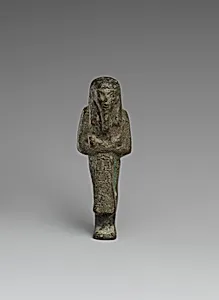
Overseer Shabti of Psusennes I
Unknown Artist
ca. 1040–992 B.C.
Medium
Bronze or copper alloy
Dimensions
H. 7 × W. 2.4 × D. 1.7 cm (2 3/4 × 15/16 × 11/16 in.)
Classification
Shabti, Psusennes I, overseer
Period
Third Intermediate Period
Department
Egyptian Art
Museum
Metropolitan Museum of Art, New York, NY
Credit
Purchase, Fletcher Fund and The Guide Foundation Inc. Gift, 1966
Accession Number
66.99.172
Rights
Public Domain
Tags
Art Historical Context
This exquisite bronze overseer shabti, created around 1040–992 B.C. during Egypt’s Third Intermediate Period, belonged to the funerary equipment of Pharaoh Psusennes I. In ancient Egyptian belief, shabti figures served as magical servants that would perform labor for the deceased in the afterlife. The “overseer” type, distinguished by its staff and whip, represented a foreman responsible for directing teams of worker shabtis, ensuring the king’s eternal needs were met without burdening his spirit. Crafted from durable bronze or copper alloy, this small yet finely detailed figure measures just over 2¾ inches tall. Metal shabtis were relatively rare compared to the more common faience or wood examples, suggesting they were reserved for royal or elite burials. Its compact scale and precise modeling reflect the high level of metallurgical skill practiced in Dynasty 21 workshops at Tanis, where Psusennes I established his capital. As part of the pharaoh’s tomb assemblage, the shabti underscores the continuity of Egyptian funerary traditions even during a time of political fragmentation. Today it offers visitors a tangible connection to the sophisticated rituals and craftsmanship that accompanied one of Egypt’s most intriguing royal burials.