
赤脚子筆 牧牛図|Oxherding
first half of the 15th century
Medium
Hanging scroll; ink on paper
Dimensions
Image: 21 1/16 × 11 9/16 in. (53.5 × 29.4 cm) Overall with mounting: 54 3/4 × 15 5/8 in. (139 × 39.7 cm) Overall with knobs: 54 3/4 × 17 5/8 in. (139 × 44.7 cm)
Classification
Paintings
Culture & Period
Japan · Muromachi period (1392–1573)
Department
Asian Art
Museum
Metropolitan Museum of Art, New York, NY
Credit
Mary Griggs Burke Collection, Gift of the Mary and Jackson Burke Foundation, 2015
Accession Number
2015.300.47
Rights
Public Domain
Tags
Art Historical Context
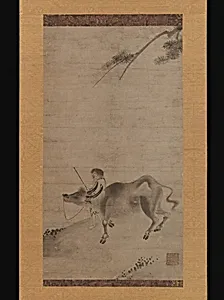
**Oxherding** *Sekkyakushi, first half of the 15 century* Hanging scroll; ink on paper This hanging scroll, created by the artist Sekkyakushi during Muromachi period (2–1573), captures a timeless rural scene of a boy tending an ox. Rendered in subtle ink washes on paper, the work exemplifies the minimalist elegance of Zen-influenced monochrome painting. Measuring about 21 by 11 inches in its image area, it unfolds as a vertical composition ideal for meditative contemplation, with the full mounting extending to over four feet—perfect for display in a tokonoma alcove during tea ceremonies or scholarly gatherings. The motif of oxherding draws from a profound Zen Buddhist allegory, symbolizing the spiritual journey toward enlightenment. The boy represents the practitioner, guiding the willful ox (the untamed mind) through stages of discipline and harmony. In the Muromachi era, amid samurai culture and imported Chinese ink traditions, such paintings bridged everyday life with philosophy, influencing later masters like Sesshū Tōyō. Sekkyakushi's spare brushwork—bold contours for the sturdy ox and fluid lines for the landscape—highlights economy of form, evoking vastness in simplicity. A gem from the Mary Griggs Burke Collection at The Metropolitan Museum of Art, this scroll invites visitors to pause and reflect on nature's quiet lessons, much like the Zen path it subtly charts.