
Pa. German Plate
c. 1938
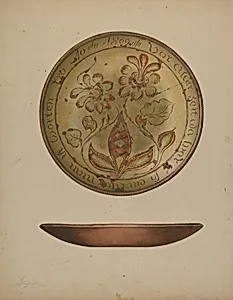
Medium
watercolor and graphite on paperboard
Dimensions
overall: 45.5 x 38.3 cm (17 15/16 x 15 1/16 in.) Original IAD Object: 1 1/4" deep; 9 5/8" in diameter
Classification
Index of American Design
Department
CG-W
Museum
National Gallery of Art, Washington, D.C.
Credit
Index of American Design
Accession Number
1943.8.3484
Rights
Public Domain
Art Historical Context
Behold the *Pa. German Plate*, vibrant watercolor and graphite rendering by Italian-American artist Giacinto Capelli created around 1938. This meticulous depiction captures a traditional Pennsylvania German ceramic plate—measuring 9⅝ inches in diameter and1¼ inches deep—from the rich folk art heritage of early American settlers. Part of the Federal Art Project's Index of American (1935–1942), a New Deal initiative during the Great Depression, the work preserves endangered examples of everyday American decorative arts through precise, colorful illustrations. Capelli's technique on paperboard masterfully replicates the plate's intricate motifs, likely featuring the bold sgraffito, slipware, or painted designs characteristic of Pennsylvania Dutch pottery. These 18th- and 19th-century pieces, crafted by German immigrants in southeastern Pennsylvania, blended European tulip motifs, hearts, and birds with a playful exuberance, symbolizing prosperity and community. The watercolor's luminous hues and graphite outlines ensure historical fidelity, making the original's textures and patterns leap off the page. Displayed in the National Gallery of Art's collection, this artwork celebrates cultural resilience, bridging Old World traditions with American identity. It invites us to appreciate how such humble objects embodied immigrant ingenuity and artistic joy.
About the Artist
Giacinto Capelli · 1855–present
**Giacinto Capelli** (American, active c. 1935–1942) contributed significantly to the documentation of American material culture through his precise watercolor renderings as part of the Index of American Design, a Federal Art Project under the Works Progress Administration (WPA). Little is known about his early life or formal training, which remains sparsely documented, though his expertise in wat...