
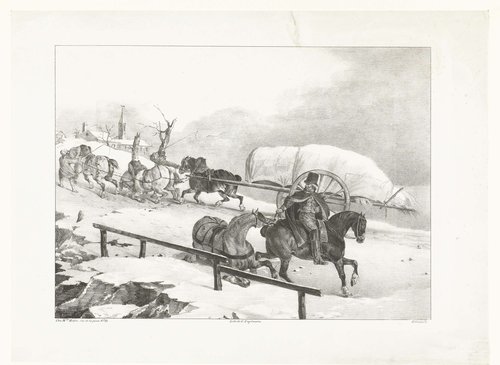
Paarden en voertuig in de sneeuw
Théodore Géricault, 1823
About this artwork
**Paarden en voertuig in sneeuw (Horses and a Vehicle in the Snow)**Théodore Géric, the fiery French Romantic artist best known for his monumental *The Raft of the Medusa*1819), created this evocative lithography in 1823, just a year before his untimely death at age 32. Capturing horses pulling a vehicle through a snowy landscape, the work reflects Géricault's lifelong fascination with equine power and movement, often infused with dramatic tension. Amid the post-Napoleonic era's turbulent emotions, Romanticism celebrated nature's raw forces, and this print evokes the harsh beauty and isolation of winter, blending realism with emotional intensity. Printed in lithography—a revolutionary technique Géricault helped pioneer in France—the image measures approximately 221 mm high by 305 mm wide (with a sheet size noted as 284 mm × 386 mm). This method, using greasy crayon on limestone to produce multiple impressions, allowed for fluid, painterly lines that mimic the texture of snow and the muscular strain of horses. Géricault's masterful use of light and shadow heightens the scene's immediacy, making it a standout in his late series of equestrian prints. For museum visitors, this piece offers a window into Géricault's innovative spirit: bridging painting and printmaking to democratize art. Imagine the chill of the snow and the beasts' endurance—timeless symbols of human struggle against nature's whims.