
Paddle Doll
Unknown Artist
ca. 2030–1981 B.C.
Medium
Wood, linen string, paint
Dimensions
Body: H. 21.1 × W. 6.2 × Th. 0.8 cm (8 5/16 × 2 7/16 × 5/16 in.)
Classification
Paddle doll
Period
Middle Kingdom
Department
Egyptian Art
Museum
Metropolitan Museum of Art, New York, NY
Credit
Rogers Fund, 1931
Accession Number
31.3.37a, b
Rights
Public Domain
Art Historical Context
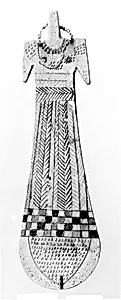
### Paddle Doll Step into the vibrant world of Egypt's Middle Kingdom with this enchanting *Paddle Doll*, crafted by an unknown artist around 2030–1981 B.C. during Dynasty 11. Measuring a delicate 8⅜ inches tall, this wooden figure—adorned with paint and string—exemplifies period's refined craftsmanship. The Middle Kingdom (ca. 2050–1710 B.C.) marked a cultural renaissance after years of unrest, with art emphasizing harmony, realism, and everyday life alongside the divine. Paddle dolls, named for their flat, paddle-like bodies, were intimate tomb offerings, often depicting women with stylized features to invoke fertility, protection, or joy in the afterlife. The use of wood as a base, enhanced by vibrant paints and practical linen string (likely for a movable skirt or hair), highlights accessible yet skillful techniques suited to non-elite burials. This Rogers Fund acquisition of 1931 at the Metropolitan Museum of Art invites us to ponder the ancient Egyptians' tender beliefs in renewal and companionship beyond death. (178 words)