
Page from Shi Zhu Zhai
Unknown Artist
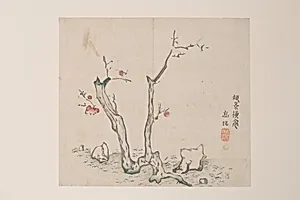
Medium
Polychrome woodblock print; ink and color on paper
Dimensions
9 7/16 x 10 3/4 in. (24 x 27.3 cm)
Classification
Prints
Culture & Period
China · Qing dynasty (1644–1911), Kangxi period (1662–1722)
Department
Asian Art
Museum
Metropolitan Museum of Art, New York, NY
Credit
Rogers Fund, 1924
Accession Number
CP99
Rights
Public Domain
Art Historical Context
This exquisite page from *Shi Zhu Zhai* (Ten Bamboo Studio) exemplifies the refined artistry of Chinese woodblock printing during the Kangxi period of the Qing dynasty (1662–1722). Created as a polychrome print with ink and color on paper, it measures just under 11 inches wide, suggesting its origins in an illustrated manual or album designed for study and appreciation. Such works were part of a long tradition in which prints served both as practical guides for painters and calligraphers and as objects of aesthetic delight in their own right. The Kangxi era marked a period of cultural renewal and technical innovation following the dynastic transition, when imperial patronage and scholarly interest encouraged the production of high-quality illustrated books. Polychrome woodblock printing, which required multiple carved blocks to layer colors precisely, allowed artists to achieve subtle gradations and vibrant effects that closely mimicked hand-painted originals. This technique elevated the printed page from mere reproduction to an art form worthy of collectors. Housed in the Metropolitan Museum’s Asian Art collection and acquired through the Rogers Fund in 1924, the print offers modern viewers a window into the scholarly culture of early Qing China, where art manuals like those from the Ten Bamboo Studio played a vital role in preserving and transmitting artistic knowledge across generations.