
Page of Calligraphy
dated A.H. 1176/ 1763 CE
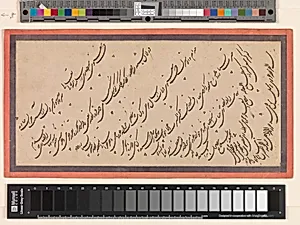
Medium
Ink, opaque watercolor, and gold on paper
Dimensions
H. 9 1/2 in. (24.1 cm) W. 4 1/2 in. (11.4 cm)
Classification
Codices
Department
Islamic Art
Museum
Metropolitan Museum of Art, New York, NY
Credit
Rogers Fund, 1946
Accession Number
46.126.4
Rights
Public Domain
Tags
Art Historical Context
This exquisite *Page of Calligraphy* Abd al-Majidqani, dated A. 1176/1763 CE, exemplifies the of Islamic artistic tradition.ed during the late Safavid or early Zand period in Persia, it reflects a time when calligraphy remained the preeminent visual art form in the Islamic world, revered for its spiritual and aesthetic power. As a single folio from a codex, likely containing Qur'anic verses or poetry in Arabic script, it measures a compact 9½ × 4½ inches, perfect for intimate study or devotional use. Taleqani, named after the Iranian region of Taleqan, employs masterful techniques with ink for precise fluid lines, opaque watercolor for vibrant accents, and gold for luminous highlights—materials that evoke divine light and elevate the page to a sacred object. The elegant proportions and rhythmic flow of the script showcase naskh or a related style, prioritizing harmony and readability while transforming words into visual poetry. Housed in the Metropolitan Museum of Art's Islamic Art Department (Rogers Fund, 1946), this work underscores calligraphy's cultural role: not mere writing, but a meditative practice linking artist, patron, and divine. Visitors will appreciate its timeless beauty, a window into 18th-century Persia's refined manuscript culture.