
Page of Calligraphy from a Kalila wa Dimna
Unknown Artist
second quarter 16th century
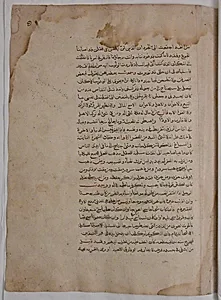
Medium
Ink and opaque watercolor on paper
Dimensions
Overall: H. 12 1/2 in. (31.8 cm) W. 8 7/8 in. (22.6 cm) Average text size: H. 8 5/8 in. (21.9 cm) W. 4 7/8 in. (12.4 cm)
Classification
Codices
Department
Islamic Art
Museum
Metropolitan Museum of Art, New York, NY
Credit
The Alice and Nasli Heeramaneck Collection, Gift of Alice Heeramaneck, 1981
Accession Number
1981.373.59
Rights
Public Domain
Tags
Art Historical Context
This stunning page of calligraphy hails from a 16th-century manuscript of *Kalila wa Dim*, a beloved collection of animal fables adapted from ancient Indian tales and translated into Arabic centuries earlier. Dating to the second quarter of the 16 century, it exemplifies the pinnacle of Islamic manuscript illumination during the Safavid era in Persia. Crafted by an unknown artist, the work measures 12½ by 8⅞ inches overall, with the elegant text block spanning 8⅝ by 4⅞ inches, making it a portable treasure from a codex in the Metropolitan Museum of Art's Islamic Art Department. Rendered in ink and opaque watercolor on paper, the page showcases masterful Arabic calligraphy—a sacred art form in Islamic culture, where intricate scripts conveyed wisdom and beauty without figurative imagery in religious contexts. *Kalila wa Dimna* ("Kalila and Dimna"), named after its wise jackal protagonists, imparts moral lessons through clever stories, influencing literature across the Islamic world and beyond. The fluid naskh or muhaqqaq script here dances across the page, heightened by vibrant colors, reflecting the technical virtuosity of court scribes who blended poetry, philosophy, and artistry. As part of The Alice and Nasli Heeramaneck Collection, this leaf invites visitors to appreciate how calligraphy elevated everyday texts into visual symphonies, preserving cultural narratives for generations.