
Page of Calligraphy from a Kalila wa Dimna
Unknown Artist
second quarter 16th century
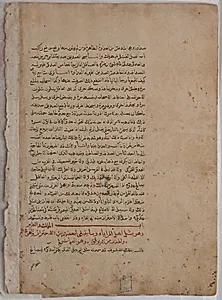
Medium
Ink and opaque watercolor on paper
Dimensions
Overall: H. 12 1/2 in. (31.8 cm) W. 8 7/8 in. (22.6 cm) Average text size: H. 8 5/8 in. (21.9 cm) W. 4 7/8 in. (12.4 cm)
Classification
Codices
Department
Islamic Art
Museum
Metropolitan Museum of Art, New York, NY
Credit
The Alice and Nasli Heeramaneck Collection, Gift of Alice Heeramaneck, 1981
Accession Number
1981.373.82
Rights
Public Domain
Tags
Art Historical Context
This exquisite page of Arabic calligraphy hails from a 16th-century manuscript of *Kalila wa Dim*, a timeless collection of animal fables originating from ancient Indian tales and translated into Arabic in the 8th century. Popular across Persian, Ottoman, and Mughal courts, the text imparts moral lessons through witty stories of cunning foxes, wise lions, and scheming beasts, much like Aesop's fables but infused with Islamic wisdom. Produced in the second quarter of the1500s—likely in a Persian workshop—this single folio captures the golden age of manuscript production, when codices like this were prized luxury items for scholars and rulers. In Islamic art, calligraphy reigns supreme as the noblest form of expression, transforming the written word into visual poetry. Here, ink flows in elegant, rhythmic scripts—possibly naskh or muhaqqaq—adorned with opaque watercolors for illuminated headings or marginal flourishes, heightening the page's spiritual and aesthetic impact. The precise dimensions (roughly 12½ by 8⅞ inches) reflect the portable yet monumental scale of these books, designed for both intimate study and public display. Today, this leaf from *The Alice and Nasli Heeramaneck Collection* graces the Metropolitan Museum of Art's Islamic Art department, inviting visitors to marvel at how fluid lines encoded centuries of storytelling and devotion. A testament to anonymous mastery, it reminds us that in Islamic tradition, beauty lies in the balance of word and form.