
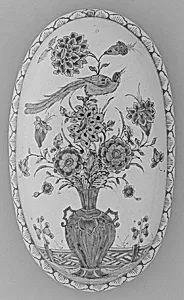
Pair of brush backs
Unknown Artist
18th century
Medium
Faience (tin-glazed earthenware)
Dimensions
Overall (each): 5 1/8 × 2 7/8 in. (13 × 7.3 cm)
Classification
Ceramics-Pottery
Culture
Dutch
Department
European Sculpture and Decorative Arts
Museum
Metropolitan Museum of Art, New York, NY
Credit
Gift of Mrs. Edward S. Harkness, 1930
Accession Number
30.135.82, .110
Rights
Public Domain
Tags
Art Historical Context
This charming pair of brush backs, crafted in 18th-century Dutch faience—tin-glazed earthenwareexemplifies the era's blend of functionality and delicate artistry. Measuring just over 5 inches, these petite objects were likely designed as ornate backs for hair or clothes brushes, adorning dressing tables in prosperous Dutch households. The tin glaze, a hallmark of European ceramics from the Renaissance onward, created a smooth, brilliant white surface ideal for vibrant painted decorations, mimicking costly Chinese porcelain while using affordable local clay. Produced during the height of Dutch ceramic production, possibly in centers like Delft, these backs feature classic motifs of birds and flowers, symbols of nature's abundance and the good life. Such designs reflected the Netherlands' enduring love for floral still lifes and avian imagery, popularized by masters like Rachel Ruysch. The unknown artist's skilled handiwork highlights faience's versatility: durable for daily use yet refined enough for display. A generous gift to The Metropolitan Museum of Art from Mrs. Edward S. Harkness in 1930, this pair invites visitors to appreciate the everyday elegance of 18th-century life, where even grooming tools became miniature canvases of joy.