
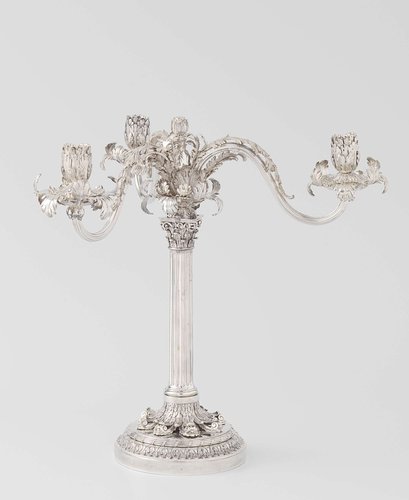
Pair of candelabra
Medium
silver (metal)
Dimensions
2326; 37.5; 35.5; 13.7
Rights
Public Domain
About this artwork
inscriptie, onderzijde bodem, graveren: ‘C’
Art Historical Context
This elegant pair of silver candel, crafted by the renowned Amsterdam silversmith Johannes Schling in 1772, exemplifies the refined metalwork of the Dutch Golden Age's later years. Standing at 35.5 cm tall with a width of 37.5 cm and depth of 137 cm, each piece weighs substantially at around 2,326 grams total for the pair, underscoring the material's luxurious heft. Schiotling, active in the vibrant silversmithing guilds of 18th-century Holland, produced functional yet opulent objects for affluent households, where such candelabra illuminated dining tables and parlors with flickering candlelight. The medium of silver was prized for its luster, malleability, and prestige, allowing artisans like Schiotling to employ techniques such as chasing, embossing, and engraving to create intricate designs. Though specific motifs aren't detailed here, 1770s Dutch silver often blended lingering Rococo flourishes—think scrolling acanthus leaves or shell motifs—with emerging Neoclassical restraint, reflecting Europe's shifting tastes amid Enlightenment ideals. A subtle engraved inscription "C" on the underside of the base hints at personalization, possibly the initial of a commissioning patron, a common practice that adds a layer of intimate history. These candelabra not only served practical purposes but symbolized wealth and hospitality in bourgeois homes. Today, they offer a tangible glimpse into 18th-century craftsmanship, inviting visitors to imagine the warm glow they once cast during evening gatherings.