
Pair of candlesticks (flambeaux or chandeliers)
1735–50
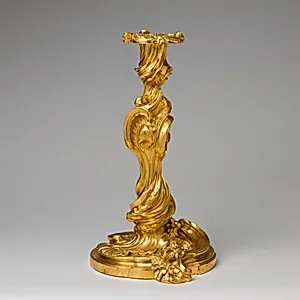
Medium
Gilt bronze
Dimensions
.1 confirmed: 12 1/8 × 7 3/8 × 7 3/8 in., 93.466oz. (30.8 × 18.7 × 18.7 cm, 2650g) .2 confirmed: 12 1/8 × 7 3/8 × 7 3/8 in., 112.864oz. (30.8 × 18.7 × 18.7 cm, 3200g)
Classification
Metalwork-Gilt Bronze
Culture
French, Paris
Department
European Sculpture and Decorative Arts
Museum
Metropolitan Museum of Art, New York, NY
Credit
Gift of Mrs. Charles Wrightsman, 1999
Accession Number
1999.370.1a, b, .2a, b
Rights
Public Domain
Art Historical Context
This exquisite pair of gilt bronze candlesticks, crafted by Juste Aurèle Meissonnier around 1735–50 in Paris, embodies the exuberant spirit of French Rococo design. Meissonnier, a versatile goldsmith, architect, and engraver, was a leading figure in the Louis XV era, blending architecture with decorative arts to create whimsical, asymmetrical forms that rejected the grandeur of Baroque in favor of playful elegance. These flambeaux—compact at about 12 inches tall—were likely intended for intimate salon lighting, evoking the flickering glow of candlelight in aristocratic interiors. The medium of gilt bronze highlights masterful techniques of the period: intricate casting followed by fire gilding, where a mercury-gold amalgam was applied and heated, yielding a radiant, durable finish that symbolized luxury and refinement. Rococo metalwork like this often featured scrolling motifs, acanthus leaves, and shell-like curves, showcasing Meissonnier's innovative fusion of sculpture and function. A gift to the Metropolitan Museum of Art from Mrs. Charles Wrightsman in 1999, these candlesticks offer a glimpse into 18th-century French opulence, where everyday objects became statements of taste and status. Visitors can appreciate how such pieces illuminated the salons of Versailles-era nobility, blending utility with artistic fantasy.
About the Artist
Juste Aurèle Meissonnier · 1695–1750
Born in Italy of French ancestry, Meissonnier made his way to Paris in 1718. Named "orfèvre du roi" in 1724 by Louis XV. Became "dessinateur de la chambre et du cabinet du roi" in 1726; meaning he designed all french court festivals. Comment on works: Draftsman; Painter; Sculptor; Architect