
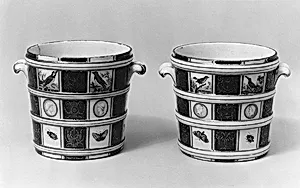
Pair of glass coolers
after 1787
Medium
Soft-paste porcelain
Dimensions
Height (each): 4 1/8 in. (10.5 cm)
Classification
Ceramics-Porcelain
Culture
Belgian, Tournai
Department
European Sculpture and Decorative Arts
Museum
Metropolitan Museum of Art, New York, NY
Credit
Gift of R. Thornton Wilson, in memory of Florence Ellsworth Wilson, 1950
Accession Number
50.211.162, .163
Rights
Public Domain
Tags
Art Historical Context
This exquisite pair of glass coolers, crafted at the renowned Tournai porcelain factory in Belgium after 1787, exemplifies the elegance of late 18th-century European ceramics. Made from soft-paste porcelain—a refined material blending clay, glass frit, and other components to mimic the prized hard-paste porcelain of Meissen and Sèvres—these diminutive coolers (each just 4 1/8 inches tall) were designed to chill wine glasses at the table, blending functionality with opulent decoration. Tournai's manufactory, established in 1751, gained fame for its high-quality output, often featuring intricate overglaze enameling and gilding inspired by French styles. Adorned with delicate motifs of birds in profile, fluttering butterflies, and insects, the coolers showcase the factory's mastery of naturalistic painting and fine detailing. These lively vignettes reflect the Rococo-to-Neoclassical transition, where nature-inspired themes celebrated the era's fascination with the natural world amid Enlightenment ideals. Such pieces were prized by affluent collectors for their whimsy and technical virtuosity. Generously gifted to the Metropolitan Museum of Art in 1950 by R. Thornton Wilson in memory of Florence Ellsworth Wilson, these coolers offer a glimpse into aristocratic dining culture, highlighting Tournai's role in Belgium's vibrant porcelain heritage.