
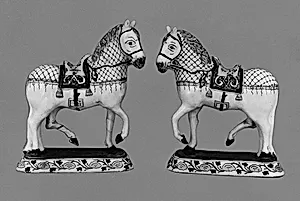
Pair of horses
Medium
Tin-glazed earthenware
Dimensions
Height (each): 9 in. (22.9 cm)
Classification
Ceramics-Pottery
Culture
Dutch, Delft
Department
European Sculpture and Decorative Arts
Museum
Metropolitan Museum of Art, New York, NY
Credit
Gift of Henry G. Marquand, 1894
Accession Number
94.4.23a, b
Rights
Public Domain
Tags
Art Historical Context
Nestled in the Metropolitan Museum of Art's European Sculpture and Decorative Arts collection, this *Pair of Horses* (ca. 1750–75) exemplifies the charm of Dutch Delftware. Crafted at the renowned De Twee ScheepjesThe Two Little Ships) in Delft by Anthoni Pennis, these tin-glazed earthenware figurines stand at 9 inches tall each. Gifted by Henry G. Marquand 1894, they the playful spirit of 18th Dutch ceramics, where potters modeled whimsical animals like these elegant steeds for mantelpieces and cabinets. Tin-glazing, Delftware's signature technique, involved coating earthenware with a tin oxide mixture before applying vibrant polychrome glazes and firing at low temperatures. This created a glossy, porcelain-like sheen that mimicked costly Chinese imports, making luxury accessible to the Dutch middle class during the waning years of the Golden Age. Delft factories like De Twee Scheepjes thrived on such innovations, producing decorative objects that blended functionality with artistry. Horses held cultural sway in Dutch society, symbolizing strength and prosperity amid a horse-powered economy of trade and agriculture. These poised pair invites visitors to appreciate how everyday motifs elevated pottery to sculptural delight, reflecting Delft's enduring legacy in European decorative arts.