
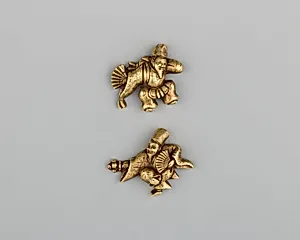
Pair of Sword-Grip Ornaments (Menuki)
Unknown Artist
late 16th–early 17th century
Medium
Gold
Dimensions
Menuki (a); L. 7/8 in. (2.2 cm); Wt. 0.2 oz. (5.7 g); menuki (b); L. 1 in. (2.5 cm); Wt. 0.2 oz. (5.7 g)
Classification
Sword Furniture-Menuki
Culture
Japanese
Department
Arms and Armor
Museum
Metropolitan Museum of Art, New York, NY
Credit
Purchase, Joseph Pulitzer Bequest, 1938
Accession Number
38.55.35a, b
Rights
Public Domain
Tags
Art Historical Context
Nestled in the Metropolitan Museum of Art's Arms Armor department, this exquisite pair of gold menukisword-grip ornaments—dates to Japan's late 16th to 17th century, a transitional era from the turbulent Muromachi period to the stable Edo shogunate. Menuki were essential components of samurai sword fittings, tucked beneath the silk wrapping of the hilt (tsuka) to the grip while serving as subtle displays of status and artistry. Crafted from pure gold, these small treasures (one 7/8 inch long, the other 1 inch, each weighing just 0.2 ounces) exemplify the meticulous metalworking of Japanese swordsmiths and decorators. The motifs, featuring fans and male figures, evoke the elegance of samurai culture, where folding fans (sensu) symbolized refinement, rank, and even battlefield commands. Gold's luster and durability highlighted the owner's wealth, as such opulent fittings adorned katana or wakizashi carried by elite warriors. Techniques likely involved hammering, chasing, and possibly inlaying to bring the designs to life, blending functionality with aesthetic poetry. Acquired in 1938 through the Joseph Pulitzer Bequest, these menuki offer a glimpse into the refined world of feudal Japan, where even weapons were canvases for cultural expression. A testament to anonymous mastery, they remind us how art permeated every aspect of samurai life.