
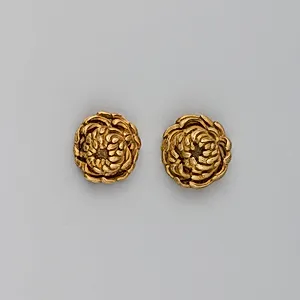
Pair of Sword-Grip Ornaments (Menuki)
Unknown Artist
18th century
Medium
Gold
Dimensions
Diam. of each 5/8 in. (1.6 cm); Wt. of each 0.2 oz. (5.7 g)
Classification
Sword Furniture-Menuki
Culture
Japanese
Department
Arms and Armor
Museum
Metropolitan Museum of Art, New York, NY
Credit
Purchase, Joseph Pulitzer Bequest, 1938
Accession Number
38.55.78a, b
Rights
Public Domain
Tags
Art Historical Context
Welcome to the Arms and Armor gallery, where we explore the exquisite fusion of function and artistry in Japanese samurai culture. This pair of *Sword-Grip Ornaments (uki)*, crafted in gleaming gold during the 18th century exemplifies the refined metalwork of Edo-period Japan. Each menuki, measuring just 5/8 inch in diameter and weighing a mere 0.2 ounces, would have been mounted on the hilt (tsuka) of a katana or wakizashi sword. These small ornaments not only secured the silk wrapping (tsuka-ito) but also elevated the weapon into a work of wearable art, adorned with delicate floral motifs that evoke the fleeting beauty of nature—a recurring theme in Japanese aesthetics. Gold was a luxurious choice for menuki, reserved for high-status swords owned by samurai or nobility, even in the relatively peaceful Edo era when swords symbolized honor rather than battlefield use. Artisans employed masterful techniques like chasing and repoussé to sculpt intricate flower designs, showcasing the precision of *kinko* (swordsmiths specializing in fittings). Acquired by The Metropolitan Museum of Art in 1938 through the Joseph Pulitzer Bequest, these ornaments highlight Japan's tradition of *mono no aware*—the pathos of things—where floral imagery reminds us of life's impermanence. Though the artist remains unknown, these menuki stand as testaments to anonymous genius, blending utility, symbolism, and opulence in miniature form. A closer look reveals the gold's luster, inviting you to appreciate the samurai's world of disciplined elegance.