
Pair of Sword-Grip Ornaments (Menuki)
Unknown Artist
18th century
Medium
Gold, silver, copper-silver alloy (shibuichi), copper, copper-gold alloy (shakudō)
Dimensions
31.49.16; L. 2 in. (5.1 cm); Wt. 0.2 oz. (5.7 g); 31.49.17; L. 1 3/4 in. (4.4 cm); Wt. 0.4 oz. (11.3 g)
Classification
Sword Furniture-Menuki
Culture
Japanese
Department
Arms and Armor
Museum
Metropolitan Museum of Art, New York, NY
Credit
Gift of George Coe Graves, 1931
Accession Number
31.49.16–.17
Rights
Public Domain
Tags
Art Historical Context
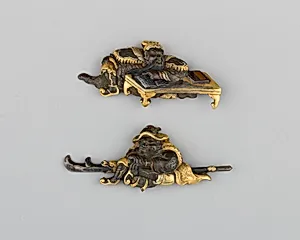
This exquisite pair of *menuki*—ornamental sword-grip fittings from 18th-century Japan— a glimpse into the refined artistry of Edo-period samurai. Crafted for the hilt of a katana or wakizashi, these small treasures (measuring just 1¾ to 2 inches long) were both functional and decorative, securing the handle's wrapping while showcasing the wearer's status and taste. The motifs of men reading evoke a harmonious blend of martial prowess and scholarly pursuits, reflecting the samurai ideal of the cultured warrior who valued literature and poetry alongside combat. Expertly fashioned from a luxurious mix of metals—gold, silver, shibuichi (a copper-silver alloy with a subtle gray patina), copper, and shakudō (a copper-gold alloy that darkens to a velvety black)—these pieces highlight Japan's mastery of mixed-metal techniques. Artisans likely employed meticulous chasing, inlaying, and patination to create lifelike figures and textures, transforming humble fittings into miniature sculptures. Such sword furniture was a canvas for personal expression, often customized with themes from history, mythology, or daily life. A generous gift to the Metropolitan Museum of Art in 1931 from George Coe Graves, these menuki now reside in the Arms and Armor Department, reminding visitors of Japan's enduring legacy in decorative metalwork. Weighing a mere 0.2 to 0.4 ounces, they pack the weight of centuries-old craftsmanship into your palm.