
Pair of Vases
Unknown Artist
late 19th century
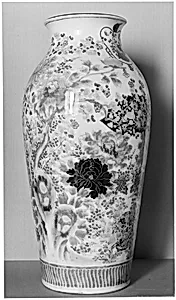
Medium
White porcelain decorated with blue under the glaze, enamel, iron red and gold (Arita ware)
Dimensions
a) H. 19 1/8 in. (48.6 cm); Diam. 9 1/4 in. (23.5 cm); Diam. of rim 6 1/8 in. (15.6 cm); Diam. of base 6 3/8 in. (16.2 cm) b) H. 19 3/8 in. (49.2 cm); Diam. 9 in. (22.9 cm); Diam. of rim 6 1/8 in. (15.6 cm); Diam. of base 6 1/2 in. (16.5 cm)
Classification
Ceramics
Culture & Period
Japan · Edo (1615–1868) or Meiji period (1868–1912)
Department
Asian Art
Museum
Metropolitan Museum of Art, New York, NY
Credit
Bequest of Margaretta A. Jones, 1906
Accession Number
07.233.25a, b
Rights
Public Domain
Tags
Art Historical Context
These elegant pair of vases, crafted in late 19th-century Japan, exemplify the renowned Arita ware tradition from Saga Prefecture. Standing nearly 19 inches tall, they feature white porcelain bodies adorned with intricate floral motifs in blue under the glaze, vibrant enamel colors, iron red, and accents. The underglaze blue, fired at high temperatures for durability, forms a vivid base layer, while overglaze enamels add luxurious polychrome details—hallmarks of Arita porcelain that blended technical mastery with aesthetic refinement. Produced during the transitional late Edo (1615–1868) or early Meiji (1868–1912) period, these vases reflect Japan's booming export porcelain industry. Arita kilns, active since the 17th century, supplied European and American markets with "Imari" style wares, prized for their bold designs and exotic appeal. Floral patterns, evoking nature's beauty and seasonal harmony in Japanese culture, symbolize prosperity and longevity, making them ideal for display in elite homes. A generous bequest to The Metropolitan Museum of Art in 1906 by Margaretta A. Jones, these vases offer visitors a window into Japan's ceramic legacy, showcasing how artisans fused age-old techniques with Meiji-era innovation to create timeless treasures.