
Pair of vases with covers
ca. 1750–60
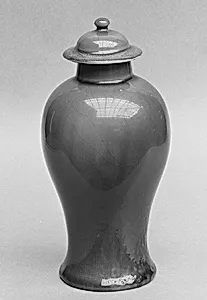
Medium
Salt-glazed stoneware
Dimensions
.51 ab) H. with cover 7 7/8 in. (20.0 cm); H. without cover 6 3/16 in. (15.7 cm) .52 ab) H. with cover 8 1/4 in. (21.0 cm); H. without cover 7 1/16 in. (17.9 cm)
Classification
Ceramics-Pottery
Culture
British, Staffordshire
Department
European Sculpture and Decorative Arts
Museum
Metropolitan Museum of Art, New York, NY
Credit
Gift of R. Thornton Wilson, in memory of Florence Ellsworth Wilson, 1950
Accession Number
50.211.51a, b, .52a, b
Rights
Public Domain
Art Historical Context
This elegant pair of vases with covers, crafted by pioneering Staffordshire potter William Littler around 1750–60, exemplifies the artistry of mid-18th-century British ceramics. Standing about 8 inches tall with their domed lids, these salt-glazed stoneware pieces were designed as both functional vessels and decorative accents, reflecting the era's growing demand for refined tableware and ornaments in affluent British homes. Salt-glazing, a hallmark technique of Staffordshire potteries, involved vaporizing salt in the kiln to create a durable, glossy finish on the stoneware body—resistant to chipping and ideal for everyday use. Littler, an innovator in the region’s thriving pottery industry, contributed to experiments with colored glazes and shapes that bridged utilitarian ware and high art. Produced during a golden age for English ceramics, just before Josiah Wedgwood’s creamware revolutionized the field, these vases capture Staffordshire’s role as Europe’s pottery powerhouse. Today, housed in The Metropolitan Museum of Art’s European Sculpture and Decorative Arts Department as a 1950 gift from R. Thornton Wilson, they offer a tangible glimpse into Georgian-era craftsmanship and domestic luxury. Visitors can appreciate how such modest yet masterful objects elevated everyday life into something beautifully enduring.