
Pair of Wheellock Pistols
Unknown Artist
ca. 1590
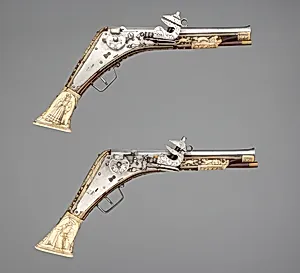
Medium
Steel, wood, ivory
Dimensions
14.25.1403a: L. 16 3/8 in. (41.6 cm); L. of barrel 10 5/8 in. (27 cm); Cal. .53 in. (13.4 mm); Wt. 3 lb. 8 oz. (1587.6 g); 14.25.1403b: L. 16 3/8 in. (41.6 cm); L. of barrel 10 9/16 in. (26.8 cm); Cal. .53 in. (13.5 mm); Wt. 3 lb. 8 oz. (1587.6 g)
Classification
Firearms-Pistols-Wheellock
Culture
German, Nuremberg
Department
Arms and Armor
Museum
Metropolitan Museum of Art, New York, NY
Credit
Gift of William H. Riggs, 1913
Accession Number
14.25.1403a, b
Rights
Public Domain
Art Historical Context
This exquisite pair of wheellock pistols, around 1590 in Nuremberg, Germany, exemplifies the pinnacle of Renaissance gunsmithing. Measuring about 16 inches long with .53-caliber barrels, each weighs roughly 3.5 pounds, making them ideal for mounted use. The wheellock mechanism—a groundbreaking innovation from the early 16th century— a spinning steel wheel to strike flint, igniting gunpowder without the need for a lit match unlike earlier matchlocks. This reliability revolutionized cavalry tactics during an era of religious wars and exploration. Nuremberg was a renowned center for fine metalwork and armor, and these pistols showcase masterful integration of steel barrels and locks with wooden stocks and ivory inlays. The unknown artisan's skill in balancing functionality with elegance reflects the period's blend of warfare and artistry, where firearms became status symbols for nobility. Often produced in pairs for symmetry and dual-wielding, they highlight Germany's leadership in firearm technology before the flintlock era. Today, gifted to the Metropolitan Museum of Art in 1913 by William H. Riggs, these pistols offer a tangible link to 16th-century innovation, reminding us how craftsmanship turned tools of conflict into objects of beauty. (198 words)