
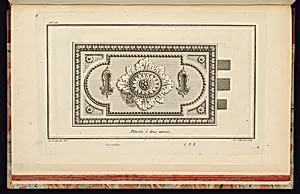
Palastre à deux entrées
Medium
Classification
Department
Smithsonian Collection
Museum
Smithsonian American Art Museum
Credit
Purchased for the Museum by the Advisory Council
Accession Number
1921-6-278-131
Rights
Public Domain
About this artwork
Research in Progress
Art Historical Context
**Palastre à deux entrées is a captivating print by Richard de Lalonde, a artist active from 1780 to 1796, created between 1775 and 1788. As part of the Smithsonian American Art Museum's collection—purchased by the Advisory Council—this work exemplifies the elegant engravings for which Lalonde was renowned. Specializing in equestrian and carriage designs, captured the opulence of late 18th-century French aristocratic life through precise line work typical of period printmaking techniques, likely etching or engraving on paper. The title refers to a "palastre," a luxurious horse-drawn carriage with two entrances, reflecting the neoclassical tastes of pre-Revolutionary France. These prints served both as artistic expressions and practical design templates for coachbuilders, blending functionality with decorative flair. Lalonde's compositions often highlighted intricate details like ornate panels, lanterns, and harnesses, evoking the grandeur of Versailles-era society amid growing social tensions. Housed in the Smithsonian Collection, this piece offers a window into the era's material culture and the print medium's role in disseminating high fashion across Europe. Though research continues, it stands as a testament to Lalonde's skill in immortalizing fleeting symbols of elite mobility. (198 words)