
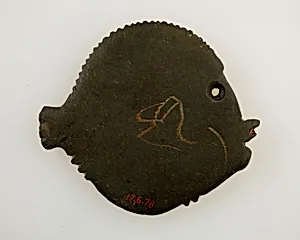
Palette in the Form of a Fish
Unknown Artist
ca. 4500–4000 B.C. (?)
Medium
Greywacke
Dimensions
H. 6.1 cm (2 3/8 in); w. 5 cm (1 15/16 in)
Classification
Palette, fish
Period
Predynastic Period
Department
Egyptian Art
Museum
Metropolitan Museum of Art, New York, NY
Credit
Gift of Albert M. Lythgoe, 1917
Accession Number
17.6.78
Rights
Public Domain
Tags
Art Historical Context
Behold the **Palette in the Form of Fish**, a delicate treasure from Egypt's Predynastic Periodca. 4500–4000 B.C.), crafted from smooth greywacke stone Measuring just 6. cm high and 5 cm wide, this small fish-shaped object exemplifies the early ingenuity of ancient Egyptian artisans. palettes like this were essential tools for grinding pigments or cosmetics, often gifted in burials to honor the deceased in the afterlife. During the Predynastic era, before the unification of Upper and Lower Egypt around 3100 B.C., communities along the Nile flourished with vibrant artistic expression. Shaping the palette as a fish—a creature symbolizing the life-giving river—reflects a deep connection to nature and emerging symbolic thinking. Carved with precision from durable greywacke, a metamorphic rock prized for its fine grain, it showcases advanced stoneworking techniques long before the pyramids rose. Now housed in the Metropolitan Museum of Art's Egyptian Art department (gift of Albert M. Lythgoe, 1917), this palette offers a glimpse into prehistoric creativity. It whispers of rituals, daily life, and the dawn of one of history's greatest civilizations—inviting us to ponder the hands that shaped it millennia ago.