
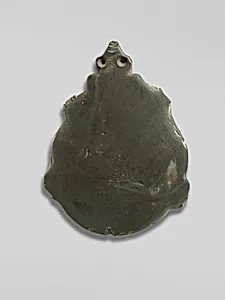
Palette in the form of a mud turtle
Unknown Artist
ca. 3650–3500 B.C.
Medium
Greywacke
Dimensions
L: 15 cm (5 7/8 in.)
Classification
Palette, mud turtle
Period
Predynastic, Naqada II
Department
Egyptian Art
Museum
Metropolitan Museum of Art, New York, NY
Credit
Rogers Fund, 1910
Accession Number
10.176.81
Rights
Public Domain
Tags
Art Historical Context
Step into the ancient world with this exquisite *Palette in the form of a mud*, crafted around 3650–3500 B.C. during Egypt's Predynastic Naqada II period.ved from durable greywacke—a dense, grayish stone prized for its fine grain and workability—this 15 cm long artifact showcases the era's masterful stoneworking skills. Its naturalistic turtle form, with detailed shell patterns and sturdy limbs, reflects the Egyptians' keen observation of nature, transforming a functional object into a zoomorphic work of art. These palettes were essential tools for the elite, used to grind and mix minerals like malachite and galena into cosmetics for eye makeup—a practice tied to protection, beauty, and ritual. In Naqada II society, such items symbolized status and craftsmanship, bridging everyday utility with symbolic power. Turtles, evoking endurance and the Nile's fertile mud, may have held protective connotations in this pre-dynastic culture on the cusp of pharaonic Egypt. Housed in the Metropolitan Museum of Art's Egyptian Art Department (Rogers Fund, 1910), this palette offers a glimpse into a formative era when artistic innovation laid the groundwork for iconic dynastic masterpieces like the Narmer Palette. A testament to early ingenuity!