
Panel
Unknown Artist
ca. 1520–40
Medium
Carved oak
Dimensions
Overall (confirmed): 37 3/4 x 23 3/4 x 1 1/8 in., 11 lb. (95.9 x 60.3 x 2.9 cm, 5 kg)
Classification
Woodwork
Culture
French
Department
European Sculpture and Decorative Arts
Museum
Metropolitan Museum of Art, New York, NY
Credit
Rogers Fund, 1951
Accession Number
51.139.1
Rights
Public Domain
Tags
Art Historical Context
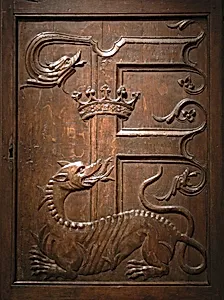
This intricately carved oak panel, to around 1520–40, hails from Renaissance France and exemplifies the era's mastery of woodwork in decorative arts. nearly three feet tall, its surface bursts with symbolic motifs: crowns and salamanders, recurring emblems that evoke royal splendor. Crafted by an unknown artist, the panel likely adorned furniture, wall paneling, or architectural elements in a grand château, showcasing the French Renaissance penchant for ornate, symbolic carving. The salamander, a fiery creature from medieval lore believed to withstand flames, was the personal emblem of King François I (r. 1515–47), symbolizing resilience and renewal. Paired with crowns, these motifs celebrate monarchical power and the humanist revival of classical motifs during François's patronage-heavy reign, which saw Italian influences flood French courts via artists like Rosso Fiorentino at Fontainebleau. Oak's durability made it ideal for such relief carvings, where tools delicately incised scales, flames, and foliage for depth and texture. Today, at The Metropolitan Museum of Art (acquired via Rogers Fund, 1951), this panel offers a tactile glimpse into 16th-century French opulence, bridging sculpture and everyday luxury in elite homes.